





Clients sometimes ask me, “Where do the most faithful wives by country come from?” My honest answer: that question points you in the wrong direction. In therapy rooms across three decades, I’ve watched loyalty grow when two people feel safe, seen, and fair to each other. It fades when secrecy, loneliness, or contempt set in. Country lines don’t decide that. Couple habits do. In this guide, I’ll unpack what “faithful” really means, why it varies by couple, share concrete examples and tools, and show what global data can and cannot tell us—without ranking women by passports.
What “Faithful” Means in Psychology
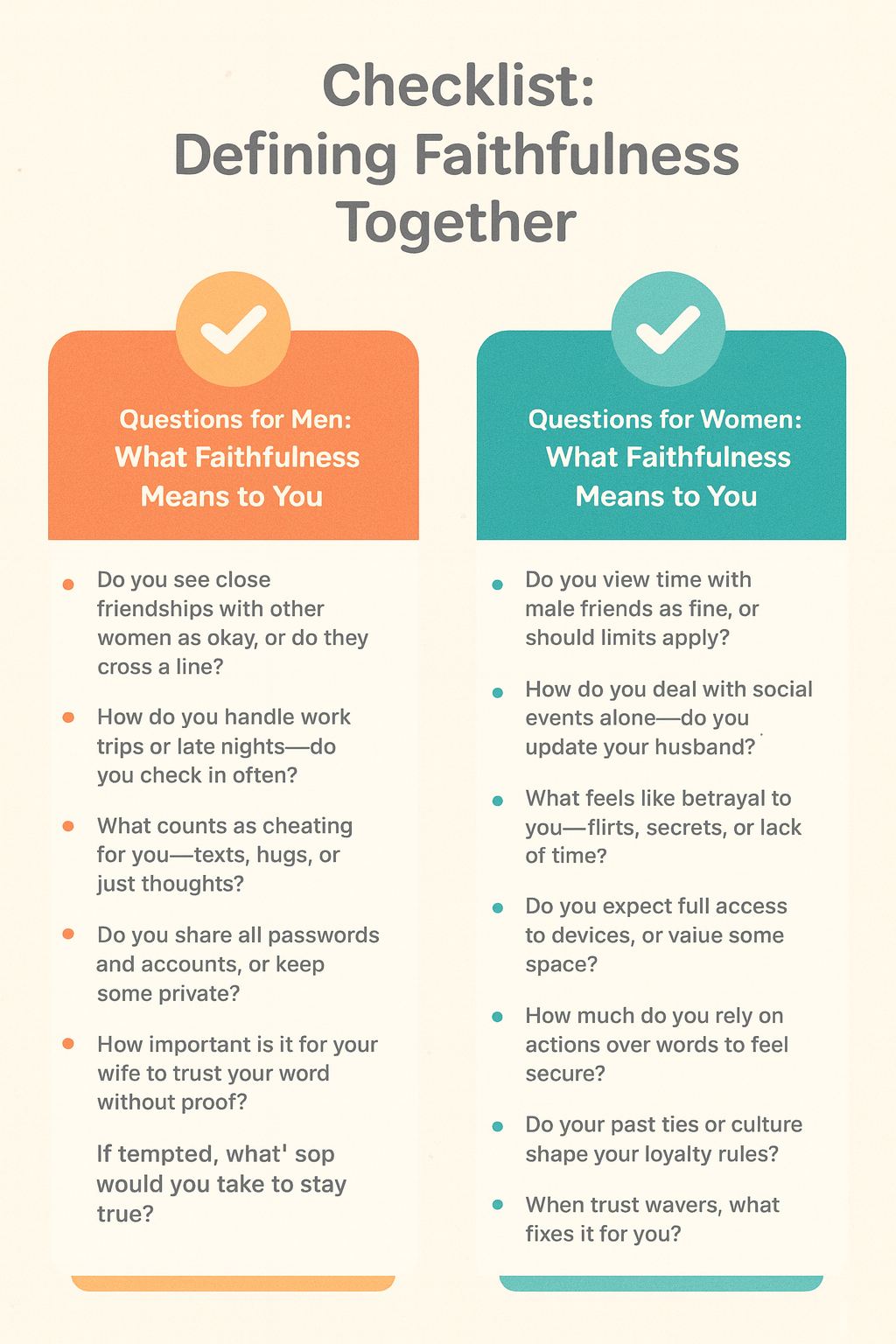
In plain terms, faithfulness is an agreement about sexual and romantic exclusivity plus a shared standard for honesty. Some couples include emotional lines—no secret chats, no private gifts, no “ex” lunches without a heads-up. Others draw a narrower line: no sexual contact outside the pair. The key is a clear, mutual promise rather than a guess.
When partners keep that promise, trust grows. The nervous system settles. Conflict still shows up, yet repair gets easier because neither person carries a hidden life. When partners break the promise, the hurt is not only sex; it is the loss of truth. I tell couples, “Affairs run on secrecy. Healing runs on steady truth.”
Culture, faith, and law shape these promises. Some societies shame affairs in public; others treat them as private. That does not prove who cheats more; it shows what people say is right or wrong when a pollster calls. Survey answers often reflect norms as much as behavior. In global polling, majorities across most countries say extramarital affairs are morally unacceptable, with a few striking exceptions in how harshly people judge them.
So, when someone asks about the most faithful wives by country, I pivot to questions that actually protect trust: What are your rules? Do you both agree? Can you talk about temptation without fear? Those answers predict far more than any flag.
Why “Faithfulness” Differs by Couple
No two couples draw the same map. Here are common places where maps diverge:
- Emotional privacy. One pair sees daily texting with an ex as fine; another sees it as a breach. Write a short rule that fits both of you.
- Friend groups. Some couples keep mixed-gender friend circles with open calendars; others prefer more boundaries. The issue is transparency, not policing.
- Work travel. Hotel bars, late dinners, conference parties—name your red lines in advance.
- Online life. Likes, DMs, and private accounts can feel harmless to one, threatening to the other. Agree on what counts as secrecy.
- Religious vows. A sacramental frame can heighten the weight of fidelity; a secular frame can still hold deep promises. The heart of both is consent and clarity.
- Living apart. Many cross-border couples do months apart for visas or work. That distance changes risk and repair needs; plan check-ins and relief visits like oxygen.
Real talk: asking “Where are the most faithful wives by country?” skips all of this and leans into stereotypes. Ask better, closer questions: “What would loyalty look like in our house? What helps us keep it?”
Practical Examples
Healthy fidelity is a daily practice, not a place on a map. These short cases (names changed) show what helps.
“The Lunch Rule”
Maya and Theo kept fighting about work lunches. Maya texted coworkers freely; Theo felt uneasy. We wrote the Lunch Rule: any opposite-sex lunch gets a heads-up that morning and a two-line check-in after. The rule turned suspicion into simple courtesy.
“The Ex On Instagram”
Olga liked her ex’s posts; Sam felt small. In session they set a four-part filter: public likes fine, no DMs, no private stories, and if the ex reached out to meet, they would decide together. Two sentences replaced three weekly fights.
“Long-Distance Months”
Ravi and Ana spent six months apart for a visa. We built a ritual ladder: morning photo (“first coffee”), midday voice note, and a Sunday 30-minute video with cameras on in both kitchens. We also named a temptation protocol: if either felt pulled to someone else, they would say so in 24 hours. Honesty came first; shame did not.
“After the Affair”
Luis had a short affair during a bleak winter. His wife Elena chose to work on the marriage. We used a full-truth timeline, then transparency windows (location and calendar sharing for 90 days), and a repair script for triggers. They paired therapy with small rituals. Trust rose slowly, with gentleness and boundaries.
“Fidelity is not only ‘no.’ It is the daily ‘yes’ to your person—clear, fair, and warm.”
Most Faithful Wives by Country | What the Data Can and Can’t Say
Short answer: there is no scientific way to rank the most faithful wives by country. Here’s why—and here’s a better path. Polls measure attitudes or self-reports, not hidden behavior. Countries differ in how safe it feels to admit taboo acts. Laws and stigma change answers. Even “divorce rates” reflect policy and economics more than private choices.
Instead of ranking women, I offer seven country snapshots to show how context shapes the conversation about fidelity. These are not leaderboards. They are lenses.
🇵🇭 Philippines
Divorce is still widely unavailable in civil law (with specific exceptions), which lowers divorce counts but does not show who cheats or stays. Debates on a divorce bill have moved forward, yet as of mid-2025 a general law has not passed. Low divorce ≠ automatic loyalty; it can also mean legal barriers or religious norms that keep couples together despite serious harm.
What to learn: Do not use divorce numbers to guess fidelity. Look at couple rules, safety, and support.
🇯🇵 Japan
Japan reports long-term declines in marriage and births, with intense work culture and late marriage. Divorce data are available and comparable through OECD/Our World in Data, yet no official national “infidelity rate” exists. Social pressures may mute self-reports. Again, attitudes and structures matter, not rankings of women.
What to learn: Economic pressure and time scarcity strain intimacy; set clear time rules and rest.
🇸🇪 Sweden
High gender equality, comprehensive welfare supports, and clear solo identity norms shape relationships. Divorce can be accessible; that says little about cheating. Surveys in Europe show broad moral disapproval of extramarital affairs, yet tolerance varies by country. Sweden’s policies support independent lives; that can raise exit when a bond is poor, which is not the same as higher unfaithfulness.
What to learn: Strong safety nets can help couples leave unhealthy bonds; the goal is a healthy bond, not a trapped one.
🇫🇷 France
Pew’s global survey found the French least likely in the sample to call infidelity “morally unacceptable” (47%). That is an attitude measure, not a behavior census. It hints at cultural frames—privacy, romance ideals—but does not prove higher cheating by wives or husbands.
What to learn: Moral language differs; write your house rules in plain words so both of you can keep them.
🇳🇬 Nigeria
Demographic and Health Surveys track sexual behavior and risk in many African countries, yet questions and underreporting vary. Studies find low reported extramarital sex among married women in some datasets, with strong social penalties likely shaping answers. Context and measurement matter.
What to learn: If shame is high, honesty drops. Build a home where truth feels safe.
🇲🇽 Mexico
Divorce and marriage trends fluctuate with policy and economics. Our World in Data supplies cross-national divorce figures but not verified “infidelity by country.” Family networks can be close; that can help support couples, yet proximity alone does not guarantee fidelity.
What to learn: Lean on kin for support while keeping couple privacy and clear boundaries.
🇺🇸 United States
US research offers deep within-country data: national surveys, clinical studies, and meta-analyses on infidelity and outcomes. Some show stable or slightly declining acceptance of extramarital sex over decades, widespread moral disapproval, and gender gaps in self-reports. None of that lets us grade other nations or rank “faithful wives.” It tells us that skills and support predict more than slogans.
Bottom line: Cross-country rankings about the most faithful wives by country are not just shaky; they can be harmful. They turn women into stereotypes and distract men and women from the real work: shared rules, steady rituals, fair money, kind repair. Use data wisely—know its limits, then build your house with care.
Can Couples From Different Cultures Build a Happy, Loyal Bond?
Yes—when loyalty is a shared choice, not a test. I’ve watched cross-border pairs set clear lines and keep them with calm habits. They name what respect looks like in each family. They plan for travel and time zones. They keep flirting inside the marriage with humor and attention.
Expect friction, not doom. Tight-rule folks and loose-rule folks often clash on time, tone, and privacy. Naming those differences helps more than arguing about “right.” Couples who keep one weekly ritual, one budget check-in, and one short repair script usually do better. Add a friend or clergy mentor who roots for the marriage rather than against one partner.
If you fear the past—an affair in your family, a parent’s divorce—say so early. Fear handled in the open shrinks. Secrets grow it. If you two can talk about risk without blame, you already hold the tools that matter more than any passport or poll.
“We don’t need perfect. We need honest, fair, and daily.”
Exercises You Can Use This Week
Start small. Pick one exercise tonight.
The Rules in Two Sentences
Each writes two clear lines about fidelity: one about sex, one about secrecy. Example: “No sexual contact outside us. No hidden chats that I would hide from you.” Swap, edit, agree, sign.
The “Temptation Protocol”
Make a plan before it’s needed. If either feels drawn to someone, say so within 24 hours. No shaming, no drama. Tell the truth, then adjust time, touch, and stress in the relationship.
The Weekly Ritual Trio
Keep one ritual from each house; create one new ritual for the two of you. Put them on the calendar. Rituals are glue; couples who keep them report higher satisfaction in many studies.
The Repair Script
After a flare-up: one regret, one request. Short, kind, specific. Example: “I’m sorry I rolled my eyes. Please text if you’ll be late.”
The Friend Check
Each partner chooses one trusted friend who supports the relationship. Share the house rules with them. Ask for support that keeps both people safe and honest.
What Research and Experience Say About Success
Global polls tell us most people in most countries call affairs wrong. That begins the story, not the end. Polls capture attitudes, not hidden behavior. France stands out for lower moral condemnation of affairs in surveys, yet those numbers do not prove higher cheating; they show different public norms.
For hard numbers, cross-national divorce stats are widely available, but divorce is a poor proxy for fidelity. Laws, religion, money, and stigma shape divorce more than private choices. Use them with caution.
Clinical research is clearer on what helps couples: steady rituals, clear agreements, and structured repair skills. Reviews across couple-therapy models show solid gains when partners practice specific tools. Add the cultural lens—tight vs. loose, individual vs. kin duty—and fights turn into solvable misreads. Skills can help you be a loyal spouse and attract one.
Trust on an Ordinary Tuesday
Big vows matter. Daily habits carry them. Faithfulness shows up in small moments you could miss if you blink. A quick text when plans change. A kind heads-up before a work lunch with someone who once felt flirty. A hand on your shoulder when you look tired. These tiny signals say, “You are my person. I am with you.”
I coach couples to tell the truth early, not late. Early truth sounds like, “A coworker messaged me after hours. I said I’d reply tomorrow.” It may feel small. It builds a wall around the house you share. Late truth drips out as crisis control. Late truth scares the nervous system and seeds doubt.
Healthy couples also practice proactive context. That means you speak to meaning, not just facts. “I will be at a conference dinner. I plan to sit with the three folks from my team. I will call you on the walk back.” Facts help; context soothes. The goal is not control. The goal is to reduce fog.
When fear knocks, you can keep calm by naming it without blame. “I feel uneasy today; can we plan a check-in at 9?” Your partner meets you there. You meet them when their fear rises. Mutual comfort is not codependency. It is a simple promise: we calm each other’s bodies so the mind stays clear. Charts about the most faithful wives by country will not do that. A steady Tuesday will.
How to Check Your Partner’s Faithfulness—and How Not To
Trust grows with openness and clear rules. Fear grows with secrecy and tricks. If you worry about fidelity, use checks that protect both of you. Skip moves that break privacy or the law. The goal is truth with dignity, not control at any cost.
Healthy, fair ways to check (with consent and care):
- Write two rules together: one about sex, one about secrecy. Sign them. Post them.
- Set a weekly 15-minute check-in: one gratitude, one worry, one plan for next week.
- Use a shared calendar: travel, late meetings, social plans. Clarity beats guessing.
- Agree on heads-up zones: work lunches, one-on-one coffees, old flames who text.
- Swap context, not essays: a brief note before and after a plan that could trigger worry.
- Create a “temptation protocol”: if either feels pulled toward someone, say so within 24 hours; ask for support, not shame.
- Phones by permission: some couples choose open-device moments. If you do, set a time limit and a purpose, then put devices away.
- Name a helper: a mentor, clergy, or therapist who supports the relationship, not one side.
- Track stress, not each other: sleep, workload, alcohol, and travel can raise risk; adjust closeness and rest on heavy weeks.
- Repair fast when small lies appear: one regret, one request, one next step.
Harmful moves that break trust (or may break the law):
- Spying tech: secret trackers, keyloggers, hidden cameras, “find my phone” misused. Do not do this.
- Fake tests: catfish accounts, staged flirty traps, friends asked to “test” your partner.
- Surprise phone grabs: reading private chats without consent, midnight audits, screen snaps.
- Quizzes with no exit: rapid-fire questions until someone slips. This is not truth; it is panic.
- Public shaming: posting hints or rants online to force a confession.
- Threats tied to immigration, money, or kids: this is abuse, not safety.
- One-sided rules: “I can have drinks after work; you cannot.” Double standards rot trust.
- Endless monitoring after an affair: transparency windows help for a time, not forever; set a review date.
- Chasing rumors: third-hand stories without facts. Ask your partner first, calmly.
- Ranking people by nationality: hunting the most faithful wives by country dodges the real work at home.
“Choose checks you would accept if the roles reversed. If you would hate it done to you, don’t do it.”
Conclusion
Chasing the most faithful wives by country leads to weak answers and unfair claims about women. Fidelity grows from a shared promise, daily habits, and a home where truth feels safe. Write two rules, build three rituals, and keep one clean repair script ready. Use country facts as background, not destiny.
If you want help turning these ideas into a simple plan—rules, rituals, repair—book a consultation. We’ll sketch steps that fit your story, your culture, and your week.
FAQs
Can surveys tell me which country has the most faithful wives?
No. Surveys measure attitudes or self-reports. Both shift with stigma and safety. Country rankings mislead.
Are low divorce rates a sign of high fidelity?
Not necessarily. Law and stigma can keep divorce low even when marriages suffer.
Is France really more permissive about affairs?
Pew found fewer French respondents called affairs morally unacceptable than in other countries. That reflects attitudes, not a behavior census.
What prevents affairs better than fear?
Clear rules, weekly rituals, fair money, kind repair. Those habits protect trust.
Can cross-border couples keep strong fidelity?
Yes. Honesty plus steady connection beats stereotypes every time.
Sources & Links
- Pew Research Center. What’s morally acceptable? It depends on where you live (global moral views; includes adultery item). (Pew Research Center)
- Pew Research Center. French more accepting of infidelity than people in other countries (attitudes snapshot). (Pew Research Center)
- Our World in Data. Marriages and divorces (cross-national divorce statistics and methods). (Our World in Data)
- The DHS Program. Indicator Explorer: higher-risk sex; measurement notes (limits of self-report and indicator definitions). (DHS Program)
- Uthman OA et al. Extra-marital sex among women in Nigeria (DHS-based analysis; under-reporting cautions). (PMC)
- Al Jazeera. The Philippines considers making divorce legal (legal context; country snapshot). (Al Jazeera)
- Respicio & Co. Status of divorce legislation in Philippines, 2025 (legal status update). (RESPICIO & CO.)
- Reuters. Japan births fall to record low in 2024 (societal context; marriage trends). (Reuters)
- Fiese BH et al. Family routines and rituals; related work on religious holiday rituals and marital satisfaction (evidence that rituals help couples). (PubMed)