





Clients often ask me about the dangers of marrying a foreigner. My answer is straight: risk is real in any marriage, and some risks rise when borders, paperwork, and power gaps enter the picture. The fix is not fear; the fix is a plan. In this guide I’ll map the most common hazards I see in my caseload and show you how to lower them. You’ll get simple checklists, myth-busting, and links to official resources. We’ll also look at how often cross-border couples succeed and what actually predicts a steady marriage.
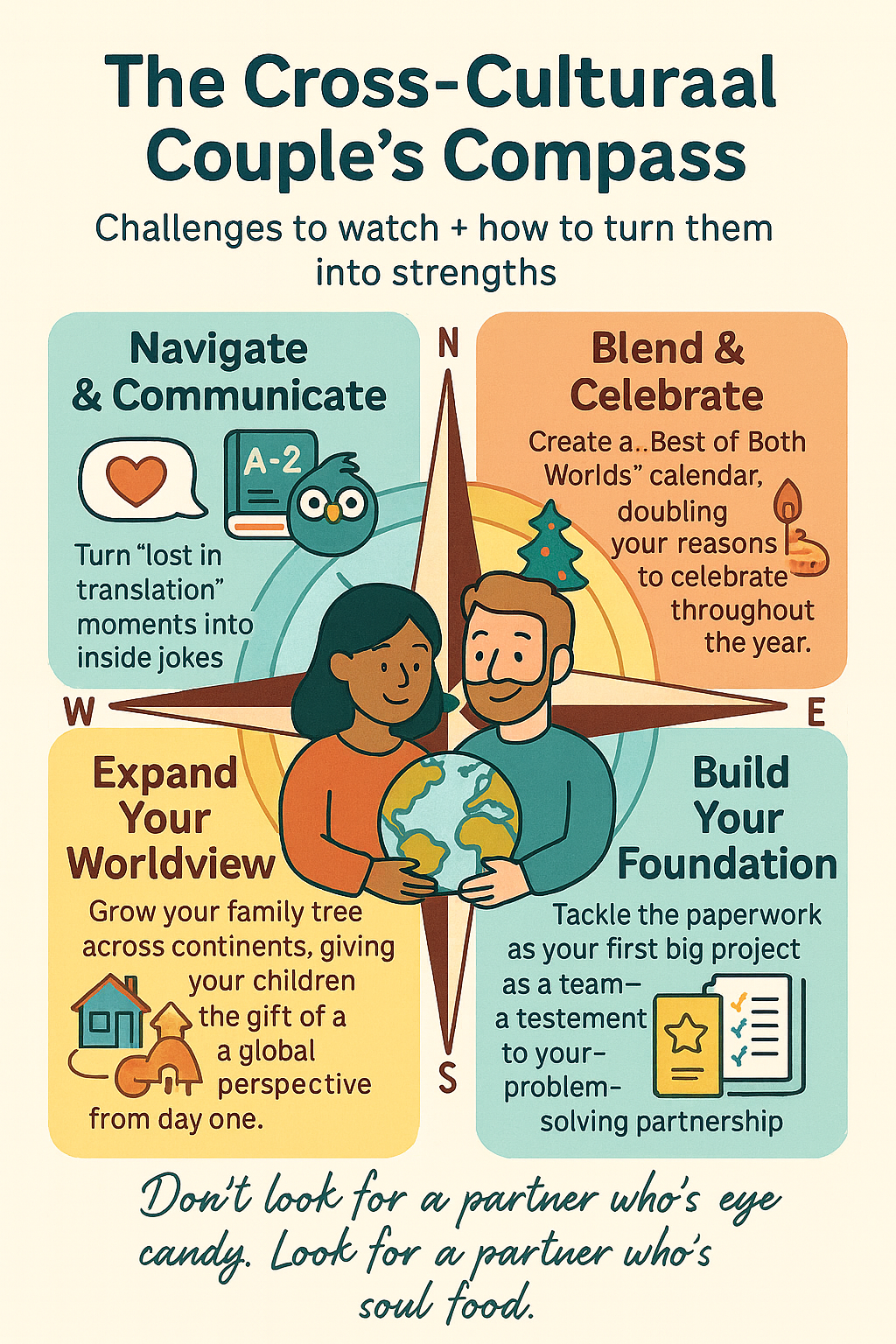
The Real Dangers of Marrying a Foreigner—and How to Avoid Them
Start with this frame: risk grows in fog. Safety grows in clear steps you both can see.
1) Romance scams and fake identities
Scammers script fast love, push to move off the app, then ask for money or crypto. Losses reported to the FBI’s Internet Crime Complaint Center topped $16 billion in 2024 across all cybercrime, with romance fraud a major slice. Report at the real IC3 site; avoid spoofed portals.
Protective move: No money, no crypto, no gift cards—ever. Video chat before feelings run hot; meet in public; verify names and workplaces. The FTC has a plain-English guide to romance scams.
2) Power imbalances tied to visas and money
When one partner holds immigration status, power can skew. In the U.S., laws punish sham marriages and also protect immigrants who face abuse. Remember: both can seek help without the citizen’s permission.
Protective move: Keep choices transparent—timelines, budgets, and fees written down. If abuse or coercion appears, learn about VAWA self-petition options and I-751 abuse waivers that let a spouse file without the abuser. Confidential help exists.
3) Marriage brokers and weak vetting
Some “international dating” services ignore safety. U.S. law (IMBRA) sets rules for marriage brokers, adds disclosures, and tries to reduce harm. Learn the basics; avoid pay-to-message sites with fake profiles.
Protective move: Prefer mainstream platforms with reporting tools; use video early; meet in public; keep receipts and copies of all chats.
4) Bureaucracy burnout and bad advice
Paperwork piles up: affidavits, apostilles, interviews. Bad forums and unlicensed “fixers” can derail a solid case. U.S. guidance: marriages abroad must follow local law to be valid; immigration benefits are a separate step.
Protective move: Read official sites first; store documents in a shared folder; set a weekly “paperwork hour” so forms don’t take over your nights.
5) Isolation and cultural shock
Moving far from friends and a first language can spike loneliness and control. I hear this line often: “I feel small in this new place.” It is not a flaw; it is a signal to build community on purpose.
Protective move: Two steady rooms per week—one social in person, one online with old friends. Share calendars with both families. Name homesickness without shame.
6) Financial exploitation
New partners sometimes get pushed to wire funds “for tickets,” “emergencies,” or “investment opportunities.” The FBI and major outlets continue to report heavy losses from tech-support, investment, and romance scams, with older adults hit hard.
Protective move: Create a money rule on day one: each pays own travel until both meet in public more than once. No joint accounts or loans until after marriage and a clear budget.
7) Stereotypes and expectation traps
“The women/men from X country are like Y.” Stereotypes hide real people and set you up for conflict and disappointment. I tell clients: “Pick a person, not a postcard.”
Protective move: Write your house rules in plain words. Set a weekly ritual, a monthly budget huddle, and a six-week check on roles and boundaries. Skills beat slogans.
“Safety isn’t fear. Safety is a set of small, honest steps you repeat.”
Always-On Safety Tips You Can Use This Week
Good love stays safe when the rules are simple and visible. Tape these to the fridge.
- No secrecy with money. No wires, crypto, or gift cards to anyone you have not met in public more than once. Save proof of payments
- Video by week two. No video, no visit.
- Public first meets. Daytime, busy place, separate rides, and a friend who knows your plan and checks in.
- Consent and pace. Match the slower partner on intimacy, travel, and legal steps.
- Paper trail. Shared folder for passports, forms, and receipts; back it up.
- Boundary script. “I’m not comfortable with that. Here’s what I can do.” Repeat once, then stop explaining.
- Community as armor. Two rooms a week: one local group, one call with people who love you.
- Law in your pocket. Bookmark official pages: State Department marriage abroad, DOJ marriage-fraud penalties, USCIS VAWA and I-751 waivers.
- Tech safety. Learn digital safety basics if control or stalking shows up; NNEDV’s Safety Net is a strong starting point.
- Real help fast. If harm appears, contact the National Domestic Violence Hotline or a local service. You can call, text, or chat 24/7.
Myths About “Dangerous Foreigners”
Fear sells stories. Truth helps marriages. Here are common myths that block good love and hide the actual dangers of marrying a foreigner.
“Foreigners marry only for a visa.”
Visa fraud exists and gets prosecuted, but most cross-border couples marry for the same reasons as anyone else: care, fit, and a plan for life. Sham marriages carry penalties; real marriages don’t need leverage.
“If a country has low divorce, people must be faithful.”
Not always. Low divorce can reflect legal barriers or stigma, not stable love. Use divorce rates with caution.
“Certain countries produce the ‘most loyal’ wives or husbands.”
There is no good science for ranking fidelity by country. Polls track attitudes and self-reports, which shift with stigma. Focus on your house rules, not national labels.
“International dating sites aren’t safe.”
Some are risky, yet many mainstream platforms have decent tools. Safety comes from your habits: video early, public meets, no money, report fraud at IC3.
“If someone asks for money, it’s rude to say no.”
It’s wise to say no. The FTC and FBI urge against sending funds to online contacts. Real partners respect clear boundaries.
“If abuse happens, the immigrant has no options.”
False. VAWA self-petition and I-751 abuse waivers allow some immigrants to file without the abusive spouse. Confidential help exists.
“Cross-border marriages rarely last.”
Large studies point to mixed results by context; many couples do well when skills and support are strong. Policy and social support matter more than flags. (See research section below.)
Can You Build a Happy Marriage With a Foreigner—and How Common Is It?
Short answer: yes, many do. The key is not the passport; it is the skills and the support. In the U.S., cross-difference marriages are common. About 26% of married adults report an interfaith match today, and interracial and interethnic marriages have risen since the late 1960s. Couples vary widely by city and community, but the picture is normal, not rare.
Across the OECD and EU, marriage rates and family forms shift by country, yet cross-border family life is part of the landscape. Eurostat notes millions of marriages and hundreds of thousands of divorces yearly in the EU, while OECD reviews track long-term trends in marriage and family change. These are context markers, not doom bells.
What predicts a good outcome? In my caseload and in the literature, five habits stand out:
- Clear rulebook. Two sentences on fidelity—one about sex, one about secrecy.
- Rituals. A weekly anchor and a monthly check-in lower stress and boost warmth; decades of research link rituals with better couple satisfaction.
- Money plan. Equal, proportional, or pooled-with-allowances—pick one and set a review date.
- Repair skills. One regret, one request; a 30-minute time-out; a calm return. Many therapy models support structured repair.
- Community. Two steady rooms per week—a local group and a call with old friends—reduce isolation that can fuel conflict.
So yes, talk about the dangers of marrying a foreigner, then build a plan that keeps both of you safe, honest, and connected. Most couples I see who follow these steps report rising trust within months.
Here are three new sections you can drop into the article as-is.
Attachment Across Borders: What Changes—and What Doesn’t
Attachment style doesn’t vanish when a passport stamp appears; it gets amplified. Anxious partners often read time-zone delays as rejection and fill the gap with catastrophic stories. Avoidant partners, meanwhile, may lean on distance to keep emotions tidy, then feel crowded once visas and leases remove the buffer. Immigration stress doesn’t cause these patterns; it stresses the system they live in.
The fix is predictability. Swap “text me when you can” for a visible rhythm: two check-ins per day at named times, one long call per week, a monthly weekend plan. Agree on a repair window—“we return to hard topics within 48 hours”—so conflict doesn’t drift into panic. Rituals don’t make you less romantic; they make you less brittle.
Name the story you each tell under stress. I ask couples to finish this sentence: “When I don’t hear from you, my brain says ______.” Share it, then write a short, compassionate counter-script you both can send on rough days. Example: “I’m off grid for 6 hours. We’re okay. Call at 20:00 my time.” You’re not solving attachment in a week; you’re lowering the temperature so skill can work.
Finally, widen your circle. Attachment softens when community grows. Two steady rooms a week—one local, one with long-time friends—gives the relationship breathing space and reduces the urge to make your partner your sole regulator. Cross-border love does best when support is plural, not singular.
Pre-Commitment Vetting (That You Do Together)
A healthy “vetting” process is not a secret investigation—it’s a joint transparency project. Done well, it lowers risk without shaming anyone and builds the trust you’ll need for paperwork and family blending. Use this list before you book flights or file forms.
- Identity & documentation audit: Exchange scans of passports, national IDs, and (if relevant) divorce decrees or annulments. Verify names in real-time on video while each holds the originals.
- Law & timeline map: Write down the exact legal steps you anticipate (marriage, residency, work authorization), with who files what, expected fees, and decision points. Put links to official pages in the doc.
- Public footprint check: Connect on at least two mainstream platforms and video once from a workplace or shared space (no private bedrooms only). Look for normal social traces—not glam, just grounded.
- Money transparency: Disclose debts, child support, major obligations, and recurring costs. Decide now: equal, proportional, or pooled-with-allowances? Set the first review date.
- No-asks rule until in-person: No money, crypto, gift cards, or “processing fees” before you’ve met in public more than once and both can verify identities offline.
- Digital safety basics: Use unique passwords, turn on 2FA, and decline screen-share of banking apps. If someone requests a code you just received, pause—this is a common fraud step.
- Health & history: Exchange recent STI test results if intimacy is planned; disclose relevant mental and physical health conditions as you would want from a partner.
- Conflict practice rep: Schedule a 30-minute role-play of a mild disagreement (budget, holidays). Try a time-out and a calm return. You are testing repair, not compatibility myths.
- Living plan: Where will you live the first six months? Who works? Who studies? What’s the plan if a job falls through? Write contingencies.
- Family & faith expectations: List top three non-negotiables each around holidays, worship, language with kids, and extended family involvement.
- Exit & safety plan: Identify a local shelter or hotline, save emergency numbers, and agree on where passports live. Safety plans are like seatbelts: you hope not to need them.
- Professional support: Budget for at least one consultation with an immigration attorney and (if needed) a certified interpreter; a single clean hour can prevent months of confusion.
Situations to Expect—and Scripts That Keep You Safe
Cross-border couples tend to face the same handful of pinch points. Expect them, plan a response, and you’ll be calmer when they show up.
When the Pace Feels Rushed
If you hear: “Let’s marry this month so we don’t waste time,” slow the system, not the bond. Say: “I want this to be solid. Here’s our step-by-step plan and the date we’ll revisit marriage.” Put the revisit date on both calendars and keep connection warm in the meantime.
When Money Enters the Chat
Requests often arrive wrapped in urgency: tickets, emergencies, “investment opportunities.” Your line: “I don’t send money in dating. I’m happy to plan a visit we both fund.” A partner aligned with your safety will respect the boundary and pivot to logistics.
When Paperwork Becomes Leverage
“Sign this now or I won’t file” is a red flag. Replace coercion with transparency: “Immigration choices are joint decisions. Let’s list options from official sources and pick with informed consent.” If the dynamic turns punishing, learn about confidential filing options and get outside help.
When You’re Far From Your People
Isolation feeds control. Before you move, pre-build your week: one local room (class, sport, volunteer shift) and one standing call with a friend or family member. Tell your partner: “My independence is part of how I love well.” Healthy partners cheer your network.
When Values Collide (Gender, Roles, Faith)
Don’t debate abstractions; negotiate behaviors. Try: “Here are my three must-haves and my three flexibles. What are yours?” Convert values into small, visible agreements (budget leadership, childcare hours, worship rhythm), then schedule a six-week check.
When Online Identity Doesn’t Add Up
Gaps happen; stories change. Your move is curiosity plus verification: “Can we video from your office/campus tomorrow and add two references I can meet on a group call?” Real people with real lives can supply simple anchors without drama.
When In-Person Chemistry Feels Different
Travel adds nerves. Don’t sprint to a verdict on day one. Say: “I like you and I’m also calibrating. Let’s keep public meets this trip and make space for honest debriefs at night.” You’re choosing clarity over pressure, which is how trust grows.
When You Need to Pause or Exit
Safety first, dignity second, closure last. Script: “I’m pausing the relationship for my safety and clarity. I won’t discuss this further right now. I wish you well.” Tell one trusted person your plan, move passports and devices to secure spots, and contact a hotline if you feel at risk.
Conclusion
The dangers of marrying a foreigner are real, yet manageable with clear rules and steady habits. Keep money off the table with new contacts, meet in public, protect each other’s dignity, and write your promises down. Learn the law that shields you, and use it if harm appears. A healthy cross-border marriage runs on the same fuel as any great marriage: truth, fairness, and regular care.
Want a tailor-made safety and connection plan? Book a consultation. We’ll map your next four weeks—simple steps that protect love and lower risk.
FAQs
Is it safe to meet someone abroad from an app?
Safer when you use video first, meet in public, and never send money. Report fraud to the real IC3 site.
What laws protect immigrants who face abuse in the U.S.?
VAWA self-petition and I-751 abuse waivers allow some spouses to file without the abuser. Confidential help is available.
Does a marriage abroad count at home?
Usually when it follows local law. Immigration benefits are a separate process. Check State Department guidance.
How common are cross-difference marriages?
Interfaith matches in the U.S. sit near one-quarter today; interracial and interethnic marriages have grown since the 1960s.
Where can I get help now if I feel unsafe?
Contact the National Domestic Violence Hotline for 24/7 support; learn tech safety basics at NNEDV’s Safety Net.
Sources & Further Reading
- FBI IC3 2024 Internet Crime Report (losses > $16B). (ic3.gov)
- FBI press release on 2024 IC3 data (losses and trends). (Federal Bureau of Investigation)
- FTC Consumer Advice: What to know about romance scams. (Consumer Advice)
- U.S. DOJ: Marriage fraud statutes and penalties. (Ministry of Justice)
- U.S. State Dept.: Marriage abroad—local law & validity basics. (travel.state.gov)
- USCIS: Abused spouses, children, and parents (VAWA); I-751 waiver guidance. (U.S. Citizenship and Immigration Services)
- Pew Research Center (2025): Religious intermarriage. (Pew Research Center)
- Pew Research Center: Intermarriage topic hub (race/ethnicity trends). (Pew Research Center)
- Eurostat: Marriage and divorce statistics (EU). (European Commission)
- OECD Society at a Glance 2024: Marriage and divorce overview. (OECD)
- NNEDV Safety Net: Technology safety resources. (NNEDV)
- National Domestic Violence Hotline: 24/7 confidential help. (The Hotline)